The Swiss Flag — One of the world's most recognizable symbols, featuring a bold white equilateral cross on a striking red background. Unlike most flags, the Swiss flag is square-shaped (though rectangular versions exist for maritime use). The white cross represents purity, innocence, and peace, while the red symbolizes bravery and strength. This iconic design has represented Switzerland since the Middle Ages and is instantly associated with precision, quality, and neutrality.
Imagine a country where snow-capped peaks touch the heavens, where crystalline lakes mirror medieval castles, and where every train journey feels like a scene from a fairytale. Welcome to Switzerland — a landlocked jewel nestled in the heart of Europe that somehow manages to pack the most dramatic landscapes on the continent into a space smaller than South Carolina.
Switzerland isn't just a destination; it's an experience that engages all your senses. The crisp, pure mountain air fills your lungs as cowbells create melodic soundtracks across emerald meadows. Chocolate here isn't just candy — it's centuries of perfected craftsmanship. And the punctuality? When the Swiss say the train leaves at 2:03, they mean 2:03:00, not a second later. This is a country that takes "doing things properly" to an art form.
📍 Largest City — 47.3769° N, 8.5417° E
Zurich: Where Banking Meets Bohemian Chic
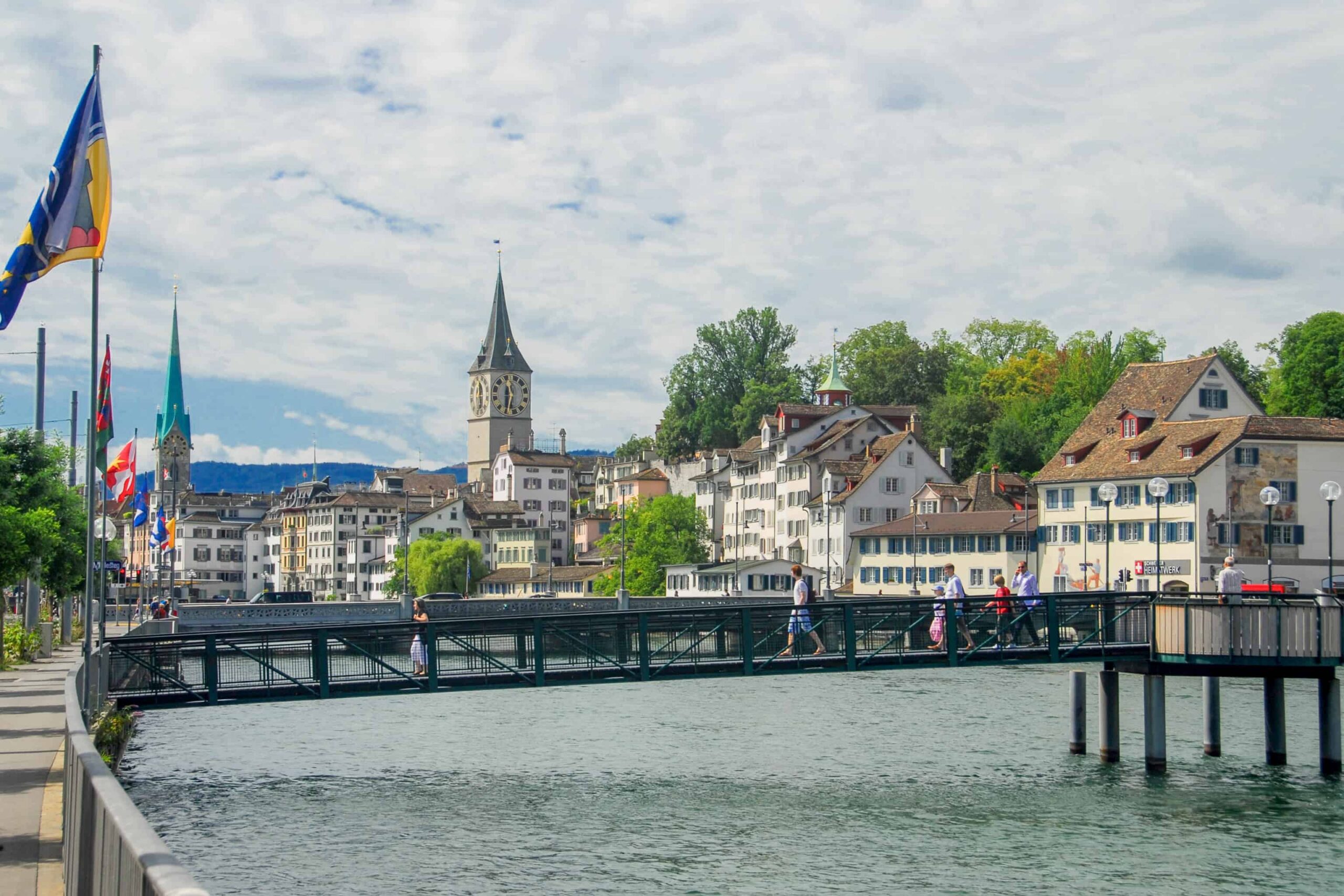
The enchanting old town along the Limmat River
Don't let Zurich's reputation as a global financial hub fool you — this city pulses with creativity and soul. The Limmat River slices through the medieval old town (Altstadt), where winding cobblestone streets reveal hidden courtyards, artisanal coffee shops, and galleries that would make Berlin jealous. The twin towers of Grossmünster Cathedral dominate the skyline, while the lakefront promenade invites you to swim in surprisingly clean urban waters during summer.
What makes Zurich special is its seamless blend of luxury and laid-back charm. You can breakfast on Zopf (traditional braided bread) at a corner bakery, browse haute couture on Bahnhofstrasse (one of the world's most expensive shopping streets), and hike through wildflower meadows within 30 minutes of the city center. At night, the district of Zürich West transforms into a hipster paradise with rooftop bars and industrial-chic restaurants.
💡 Fun Fact: Zurich has over 1,200 public water fountains — more than any other city in the world. The water comes straight from the Alps and is cleaner than bottled water. Bring a reusable bottle and drink for free!
📍 International Hub — 46.2044° N, 6.1432° E
Geneva: Diplomacy, Chocolate & The World's Tallest Fountain
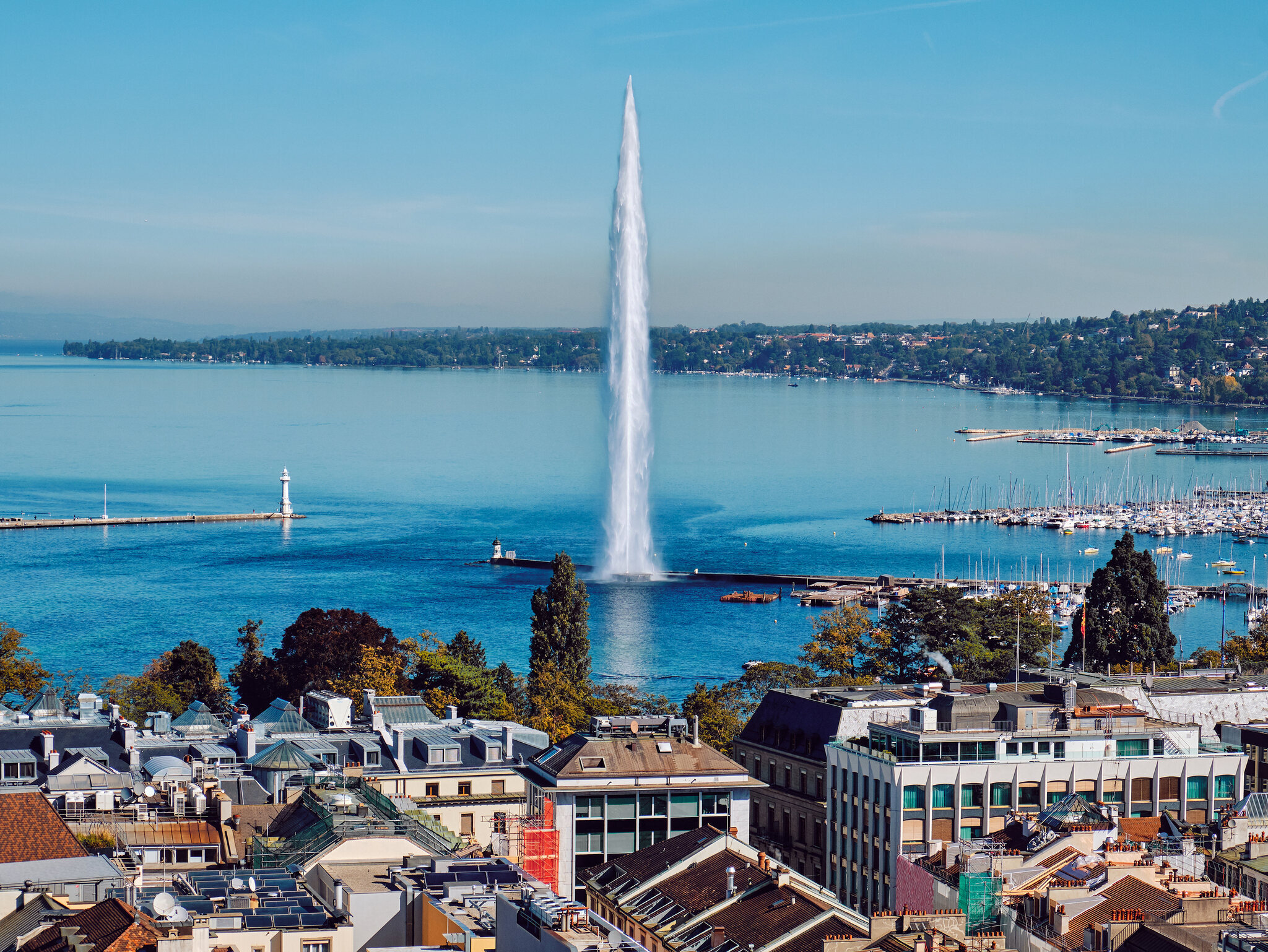
The iconic Jet d'Eau shooting 140 meters into the sky
Geneva wears its international status with effortless grace. Home to the United Nations, Red Cross, and countless luxury watchmakers, this French-speaking city sits at the tip of Lake Geneva (Lac Léman) with the snow-capped Mont Blanc visible in the distance on clear days. The city's crown jewel is the Jet d'Eau — a water fountain so powerful it shoots 500 liters of water per second 140 meters into the air.
Stroll through the Old Town's maze of narrow streets to discover Saint Pierre Cathedral, where John Calvin once preached, or explore the Paquis district for some of the best international cuisine in Europe. Geneva is surprisingly diverse — over 40% of residents are foreign-born, creating a cosmopolitan atmosphere where you can hear a dozen languages during a single café visit.
Must-Try: Genevan fondue is legendary, but locals also swear by longeole (a traditional sausage) and tarte aux pruneaux (prune tart). Wash it down with local Chasselas wine from the nearby Lavaux vineyards.
📍 Central Switzerland — 47.0502° N, 8.3093° E
Lucerne: The Fairytale City
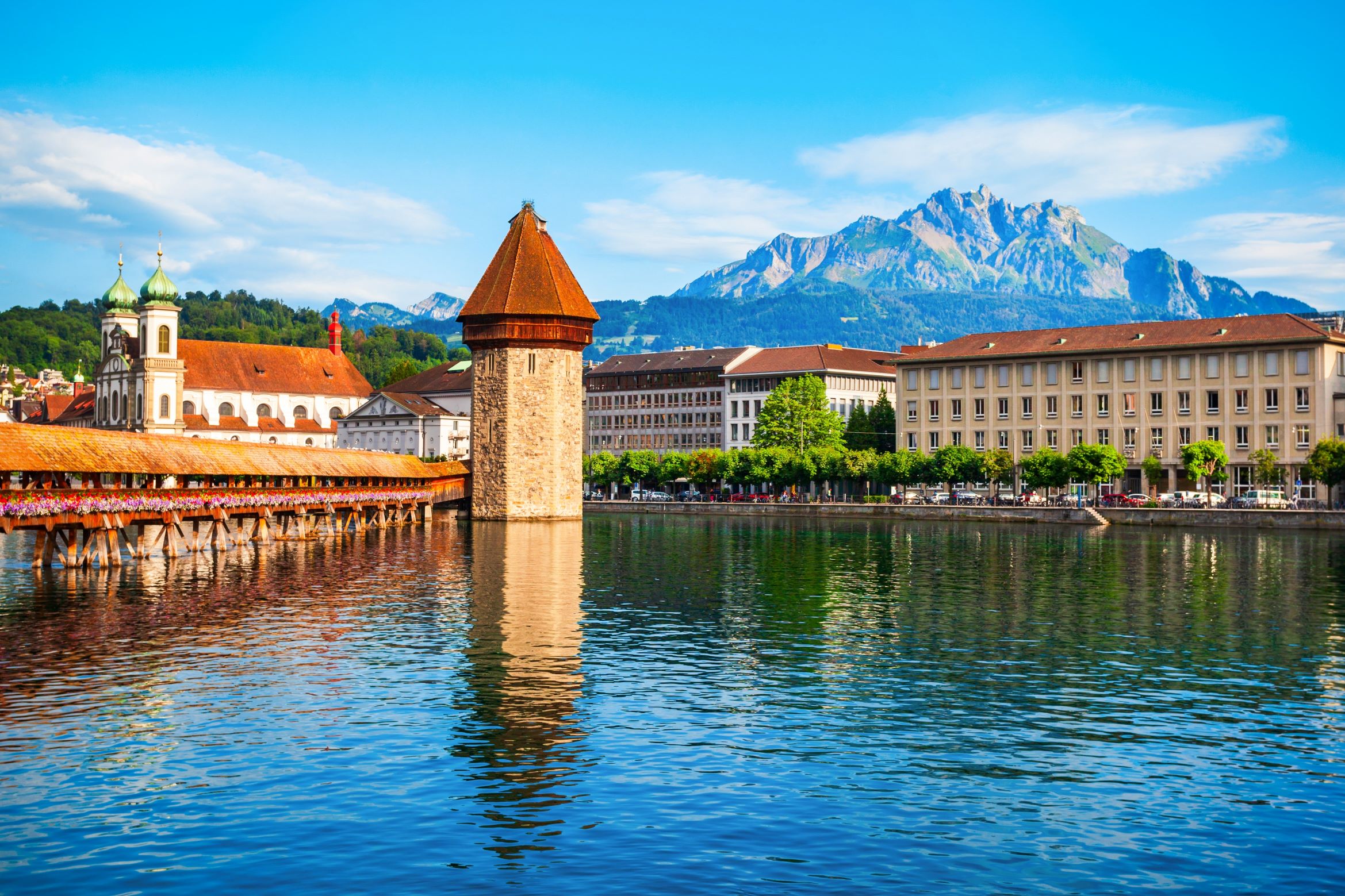
The Chapel Bridge and Water Tower against a backdrop of Mount Pilatus
If Disney were to design a Swiss city, it would look exactly like Lucerne. Nestled between a cobalt-blue lake and towering mountains, this compact city feels almost too perfect to be real. The Chapel Bridge (Kapellbrücke) is Europe's oldest covered wooden bridge, dating back to 1333, and features 17th-century triangular paintings depicting local history. The octagonal water tower beside it once served as a prison and torture chamber — a stark contrast to today's romantic setting.
Take the world's steepest cogwheel railway up Mount Pilatus for panoramic views, or cruise across Lake Lucerne in a historic paddle steamer. The city's old town is pedestrian-friendly and filled with frescoed buildings that look like gingerbread houses. As evening approaches and the mountains turn pink in the alpine glow, you'll understand why Mark Twain called Lucerne "the loveliest place I have ever seen."
📍 Valais Alps — 46.0207° N, 7.7491° E
Zermatt: The Matterhorn's Guardian
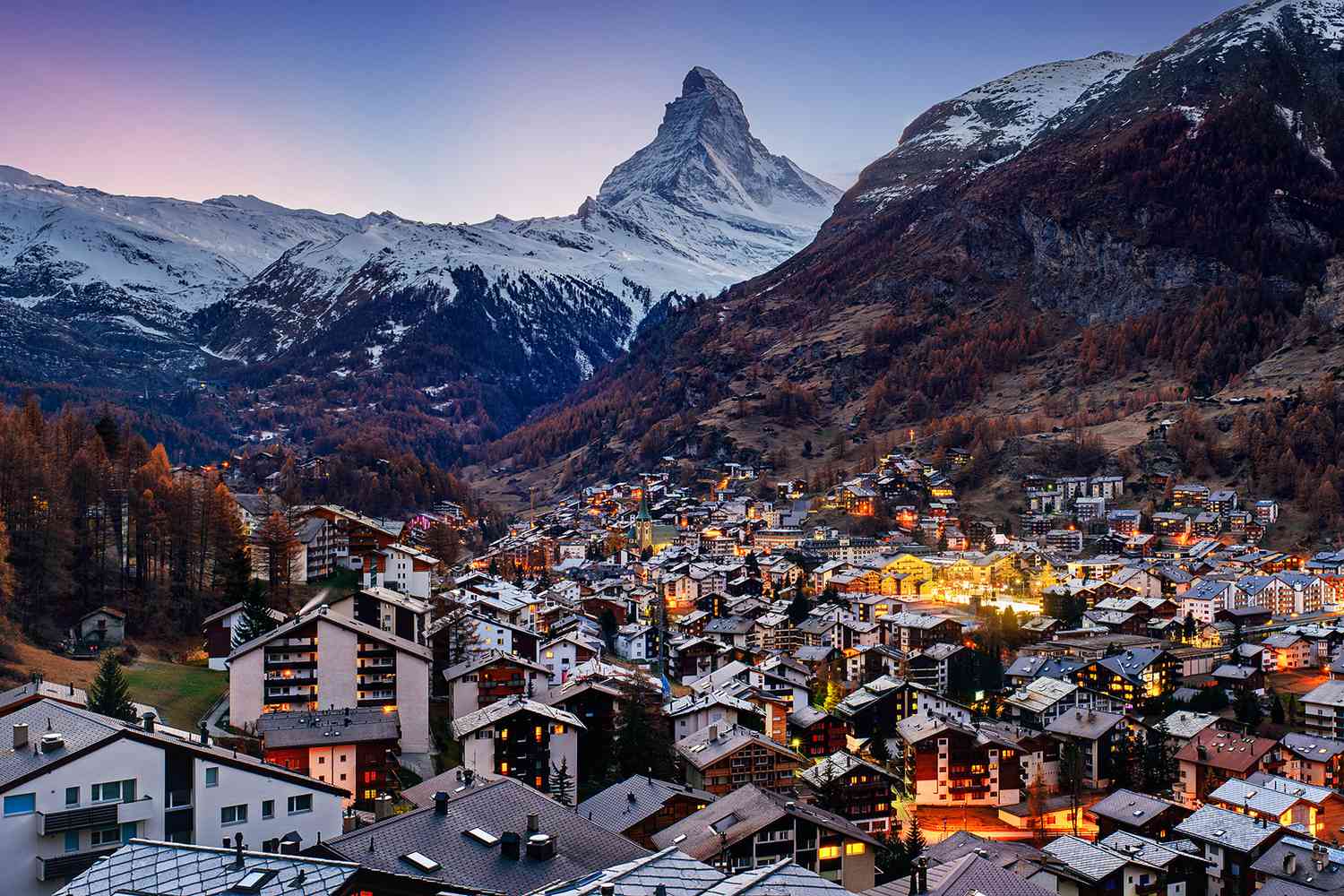
The village of Zermatt beneath the iconic Matterhorn peak
Car-free, cozy, and crowned by the world's most photographed mountain — welcome to Zermatt. This car-free village sits at the foot of the Matterhorn, that perfect pyramidal peak that adorns Toblerone chocolate bars and has called climbers to their glory (and sometimes doom) since the first ascent in 1865. The village maintains strict environmental standards — only electric vehicles are permitted, creating an atmosphere of pure mountain tranquility.
In winter, Zermatt offers 360 kilometers of slopes connecting Switzerland and Italy. In summer, it transforms into a hiker's paradise with over 400 kilometers of trails. But Zermatt isn't just for athletes — enjoy world-class dining (the village boasts several Michelin-starred restaurants), luxury spas, and the Gornergrat Railway, Europe's highest open-air cogwheel train, which climbs to 3,089 meters with breathtaking views of glaciers and peaks.
💡 Did you know? The Matterhorn straddles the Swiss-Italian border. When you ski from Zermatt into Cervinia, Italy, you can have pizza for lunch and fondue for dinner — all without taking off your skis!
Why Switzerland Captures Hearts
Switzerland is more than cuckoo clocks and chocolate — though both are excellent. It's a masterclass in living well, respecting nature, and preserving tradition while embracing innovation. Whether you're racing down Olympic ski slopes, sailing across turquoise lakes, or simply enjoying a rivella (a Swiss soft drink made from milk whey) on a sunny terrace, this country has a way of making you feel like you've stepped into a better version of the world.
The Swiss don't just have beautiful scenery — they've built a society that works like their famous watches: precisely, reliably, and elegantly. From the efficiency of their trains to the cleanliness of their streets, from the quality of their cheese to the warmth of their hospitality, Switzerland offers a travel experience that sets the gold standard.
🚂 Grüezi and welcome to paradise! 🇨🇭