The Polish Flag — A simple yet powerful symbol of national pride, featuring two horizontal bands of white over red. These colors derive from the heraldic coat of arms: the white eagle on a red shield. The white represents purity and peace, while the red symbolizes courage and sacrifice. Legend says the flag's origins trace back to the 13th century, making it one of Europe's oldest national symbols. When you see this flag flying over Polish cities, you're witnessing centuries of history, struggle, and triumph.
Poland is Europe's best-kept secret — a country that has risen from the ashes of history with a spirit so unbreakable it will move you to tears. Sandwiched between Germany, Czechia, Slovakia, Ukraine, Belarus, Lithuania, and Russia, this Central European gem has survived partitions, invasions, and devastation, only to emerge more vibrant, more beautiful, and more welcoming than ever.
Forget any outdated misconceptions — modern Poland is a dynamic, forward-thinking nation that honors its past while embracing the future. From the medieval spires of Kraków to the colorful burgher houses of Gdańsk, from the phoenix-like rebirth of Warsaw to the whimsical charm of Wrocław, Poland offers a travel experience that rivals Western Europe at a fraction of the cost. The food is hearty, the vodka is smooth, and the hospitality is genuine. Welcome to a land where every stone tells a story of resilience.
📍 Capital City — 52.2297° N, 21.0122° E
Warsaw: The Phoenix City
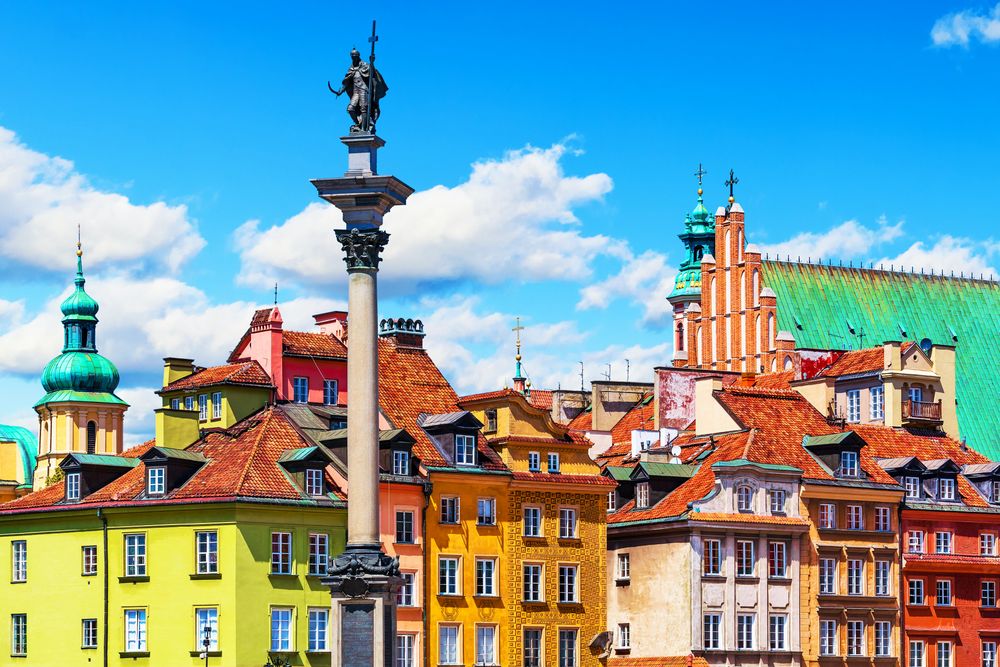
The meticulously reconstructed Old Town, a UNESCO World Heritage site
No city in the world embodies resilience quite like Warsaw. During World War II, 85% of the city was reduced to rubble — the most destroyed capital in Europe. Today, wandering through the candy-colored buildings of the Old Town, you'd never guess these structures were painstakingly rebuilt from photographs and memories. The result is so perfect that UNESCO designated the entire Old Town a World Heritage Site, calling it a "near-total reconstruction of a span of history covering the 13th to 20th centuries."
But Warsaw isn't just about the past. The modern city pulses with energy — sleek skyscrapers rise alongside communist-era architecture, creating a fascinating architectural dialogue. The Vistula River (Wisła) banks have transformed into hipster havens with beach bars and food trucks. Visit the Warsaw Uprising Museum to understand the city's soul, then head to the Praga district on the river's right bank for street art, craft breweries, and the edgiest nightlife in Poland. The city that refused to die is now thriving.
💡 Did you know? Marie Curie was born in Warsaw (as Maria Skłodowska). You can visit her birthplace museum, and her remains are interred in the Panthéon in Paris — the first woman to receive this honor based on her own merits.
📍 Cultural Capital — 50.0647° N, 19.9450° E
Kraków: The Royal Jewel
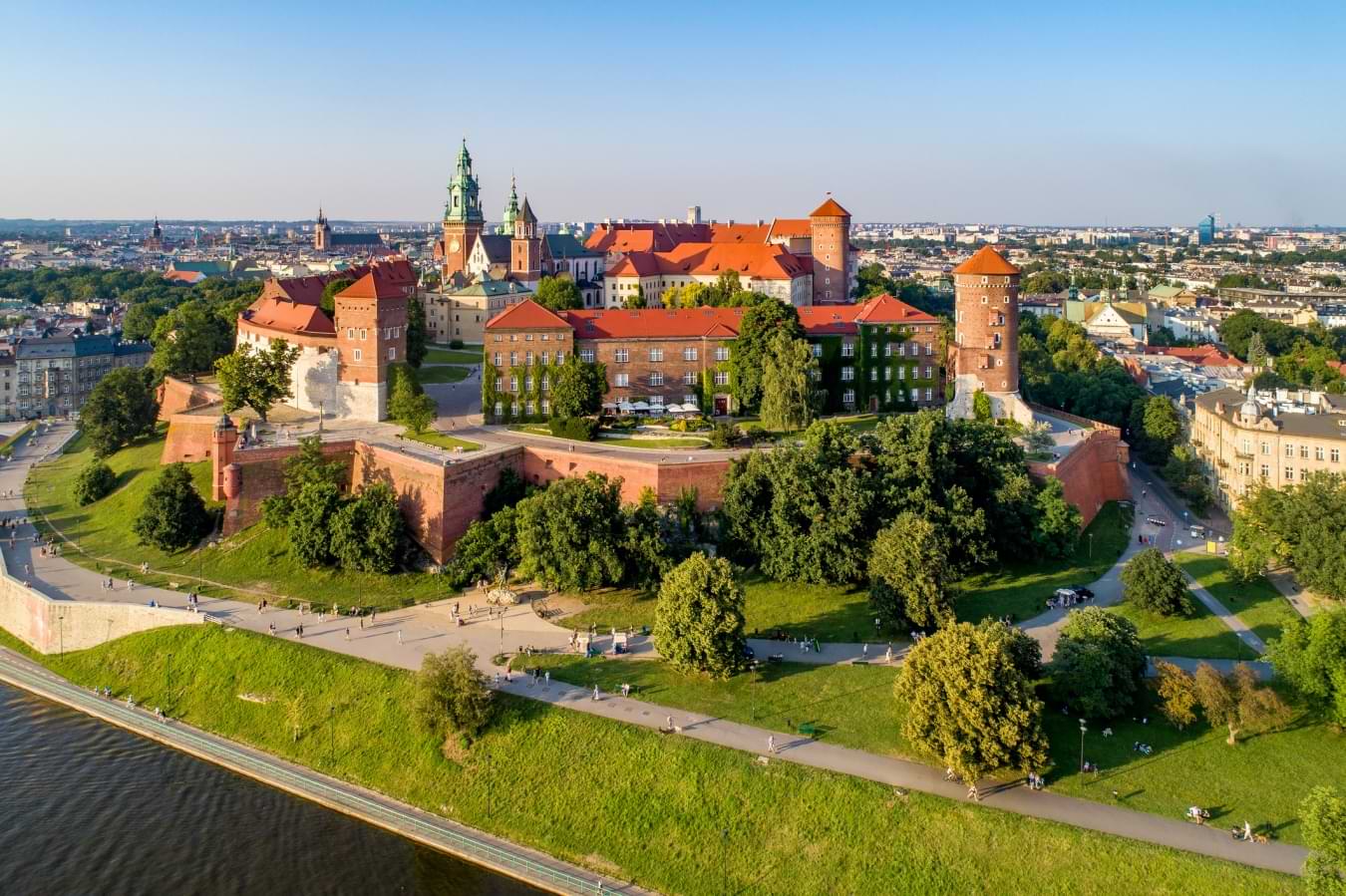
Wawel Castle overlooking the Vistula River
If Warsaw represents Poland's resilience, Kraków embodies its soul. This former royal capital escaped the worst destruction of WWII, leaving Europe's largest medieval market square (Rynek Główny) intact. The Cloth Hall (Sukiennice) still stands in the center, painted in warm Renaissance yellow, while the Gothic towers of St. Mary's Basilica pierce the sky. Every hour, a trumpeter plays the Hejnał from the taller tower — a melody that famously cuts off mid-note, commemorating the 13th-century trumpeter shot by Tartar arrows while warning of invasion.
Above the city looms Wawel Castle, the spiritual heart of Poland, where kings ruled and poets rest. The dragon statue at the castle's base breathes real fire every few minutes. Below, Kazimierz — the former Jewish quarter — has transformed into the city's cultural epicenter, with klezmer music pouring from candlelit cellars and street art celebrating the district's complex history. Kraków isn't just beautiful; it's alive with stories.
Day Trip Essential: Just 70 km from Kraków lies Auschwitz-Birkenau, the former Nazi concentration camp. While emotionally devastating, visiting this UNESCO site is crucial for understanding 20th-century history. Go with a guided tour to comprehend the full scale of the tragedy.
📍 Baltic Coast — 54.3520° N, 18.6466° E
Gdańsk: The Amber Capital
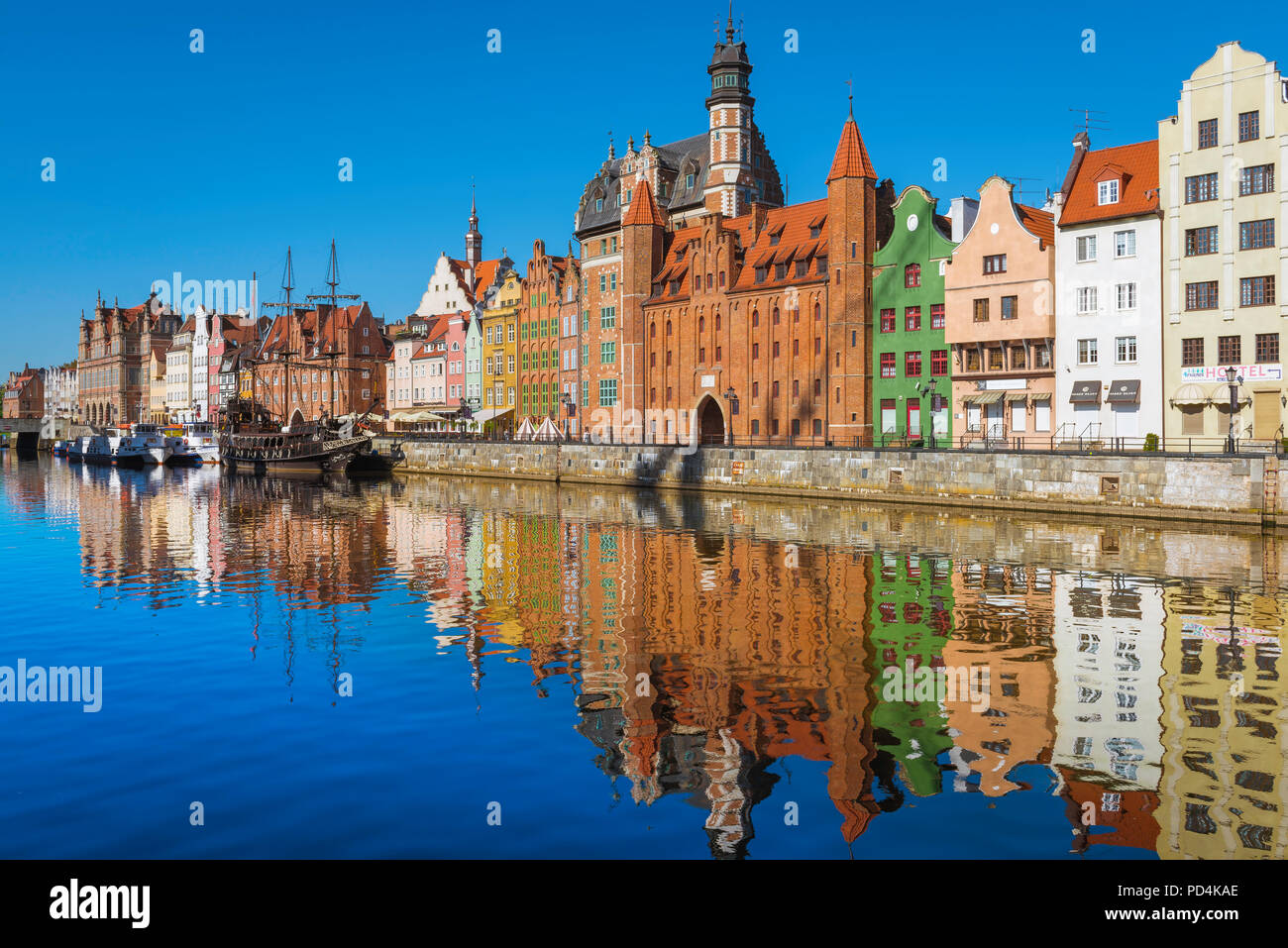
The colorful Long Embankment (Długie Pobrzeże) along the Motława River
Gdańsk will surprise you. This Baltic port city looks like Amsterdam meets Copenhagen, with a distinctly Polish soul. The Old Town features rows of narrow, colorful burgher houses in brick red, sunflower yellow, and mint green, their facades decorated with ornate gables and golden details. The Motława River waterfront, lined with medieval granaries and the iconic Żuraw — Europe's largest medieval port crane — creates postcard views at every turn.
History buffs will recognize Gdańsk as the birthplace of Solidarity (Solidarność), the trade union movement that triggered the fall of communism in Eastern Europe. The Solidarity Center museum, housed in the historic shipyards, tells this powerful story. But Gdańsk is also about amber — this is the world's amber capital. Stroll down Mariacka Street, where artisans sell jewelry made from "Baltic gold," and enjoy fresh fish straight from the sea. The nearby beach resort of Sopot, with Europe's longest wooden pier, offers perfect summer relaxation.
📍 Lower Silesia — 51.1079° N, 17.0385° E
Wrocław: The City of Dwarfs

The stunning Market Square with its rainbow-colored townhouses
Wrocław (pronounced "VROTS-wahf") is Poland's most whimsical city. The Old Town Market Square features a jaw-dropping ensemble of Gothic and Baroque townhouses painted in every color of the rainbow — candy pink, lemon yellow, sky blue, and emerald green. The Gothic Town Hall in the center looks like a wedding cake made of stone. But the real magic lies hidden in plain sight: over 600 tiny bronze dwarf statues scattered throughout the city.
This dwarf hunt began as a tribute to the Orange Alternative, an anti-communist movement that used absurdity and humor to protest the regime. Today, finding these little guys — skiing down gutters, reading newspapers, sleeping on windowsills — has become a city-wide treasure hunt perfect for families. Cross the Tumski Bridge (lovers' padlocks and all) to Cathedral Island, where gas lamps are still lit by hand each evening. Wrocław proves that Poland knows how to have fun while honoring its history.
💡 Food Alert: Try pierogi (dumplings) stuffed with everything from potatoes and cheese to blueberries. In Wrocław, look for klopsy (meatballs) and the famous Polish donut, pączki, filled with rose jam.
Why Poland Will Steal Your Heart
Poland is a country of contrasts and surprises. It's where you can visit a 1,000-year-old cathedral in the morning, dance in a converted Soviet factory in the evening, and eat a meal that costs less than your coffee back home. The people are warm, the history is profound, and the beauty — from the Tatra Mountains to the Masurian Lakes — is breathtaking.
This is a nation that remembers its past but lives fully in the present. Whether you're exploring the salt mines of Wieliczka, drinking mulled wine at a Kraków Christmas market, or simply watching the sunset over the Baltic Sea, Poland offers an authentic European experience without the crowds or costs of the West.
🥟 Cześć and welcome to the heart of Europe! 🇵🇱