The Hungarian Flag — A tricolor of red, white, and green horizontal stripes that tells the story of a nation. The red represents strength and the blood spilled for independence, white symbolizes faithfulness and freedom, while green stands for hope and the country's rich pastures. This flag has been Hungary's symbol since the 1848 revolution against Habsburg rule, though its origins trace back even further. During the communist era (1949-1989), the flag bore the socialist emblem, but the pure tricolor returned after the fall of the Iron Curtain, representing Hungary's enduring spirit and sovereignty.
Welcome to Hungary — Magyarország — a land where thermal waters bubble up from the earth, where paprika flavors every dish, and where the unique Magyar culture has thrived for over a thousand years. Landlocked in the heart of Central Europe, Hungary sits on the vast Pannonian Plain, bordered by the Carpathian Mountains and the Alps, creating a unique landscape of rolling hills, fertile valleys, and the majestic Danube River that splits Budapest in two.
This is a country of contrasts: where Roman ruins stand beside Turkish baths, where Art Nouveau cafes serve goulash centuries old, and where the language is so unique it shares no roots with any neighboring tongue. Hungary was once part of the mighty Austro-Hungarian Empire, and that imperial grandeur still echoes in Budapest's boulevards and provincial capitals. Yet beyond the postcard-perfect architecture lies a nation of warm-hearted people who take pride in their hospitality, their wines, and their tradition of thermal bathing that dates back to Roman times.
📍 Capital City — 47.4979° N, 19.0402° E
Budapest: The Pearl of the Danube
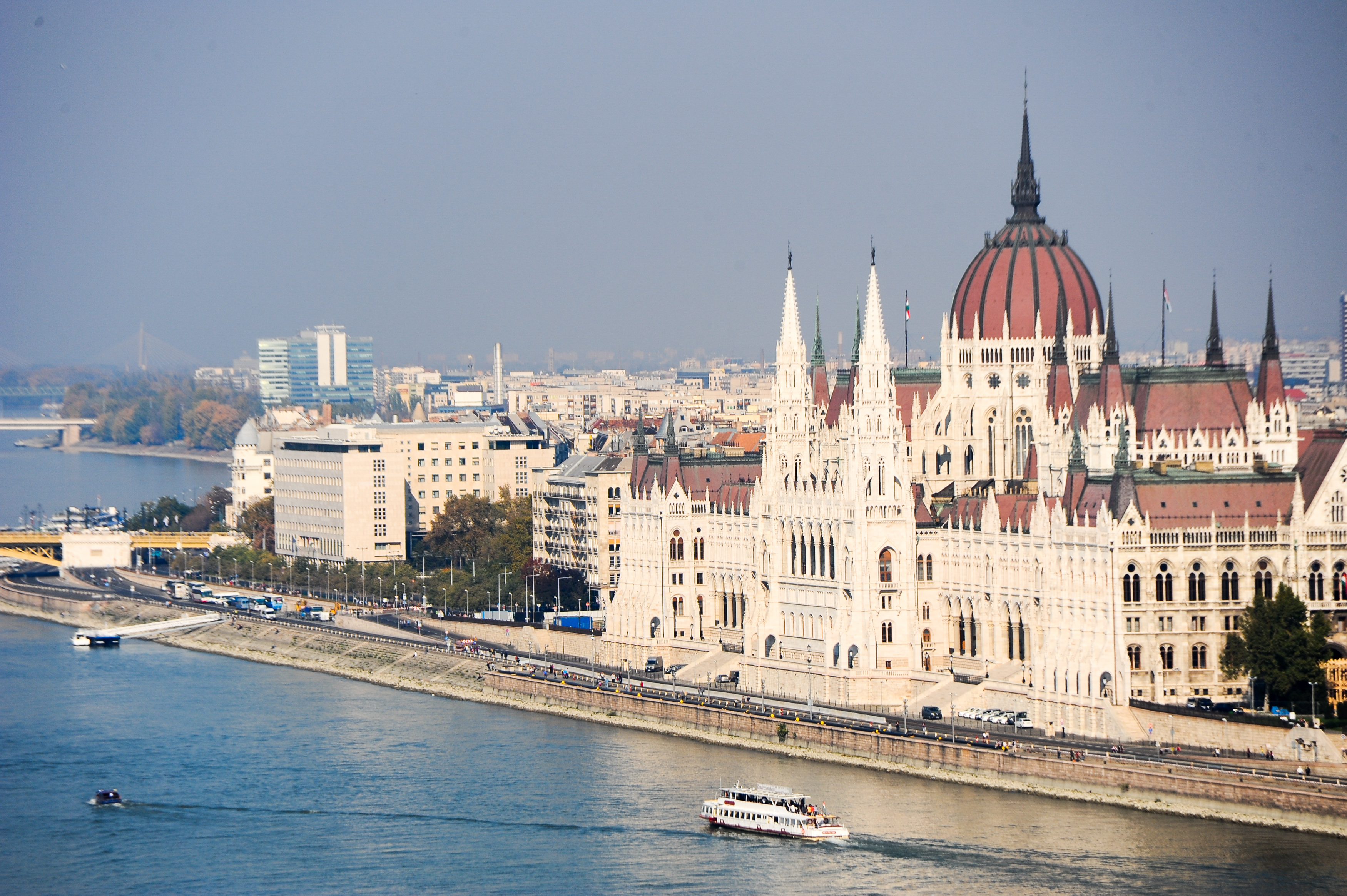
The iconic Hungarian Parliament Building along the Danube River
Budapest isn't just a city — it's an experience that will take your breath away. Straddling the Danube River, the city unites two historic towns: hilly Buda with its royal palace and thermal caves, and flat Pest with its buzzing boulevards and ruin bars. The crown jewel is the Hungarian Parliament Building, a neo-Gothic masterpiece that glows gold at sunset and stands as one of Europe's most spectacular legislative buildings.
Cross the Chain Bridge — the first permanent bridge connecting Buda and Pest, completed in 1849 — and climb Castle Hill to explore the Fisherman's Bastion, whose fairy-tale towers offer panoramic views of the city. Descend into the thermal baths that have made Budapest famous since Ottoman times: Széchenyi Baths in City Park feature outdoor pools where locals play chess in 38°C water even in winter, while Gellért Baths dazzle with Art Nouveau mosaics. As night falls, the city's unique "ruin bars" — housed in abandoned pre-war buildings filled with eclectic furniture and street art — come alive with music and the clinking of palinka (fruit brandy) glasses.
💡 Did you know? Budapest has over 100 thermal springs, earning it the nickname "City of Baths." The Romans built the first baths here over 2,000 years ago, and the tradition continues today with some of Europe's most magnificent thermal complexes.
📍 Eastern Hungary — 47.5316° N, 21.6273° E
Debrecen: The Calvinist Rome
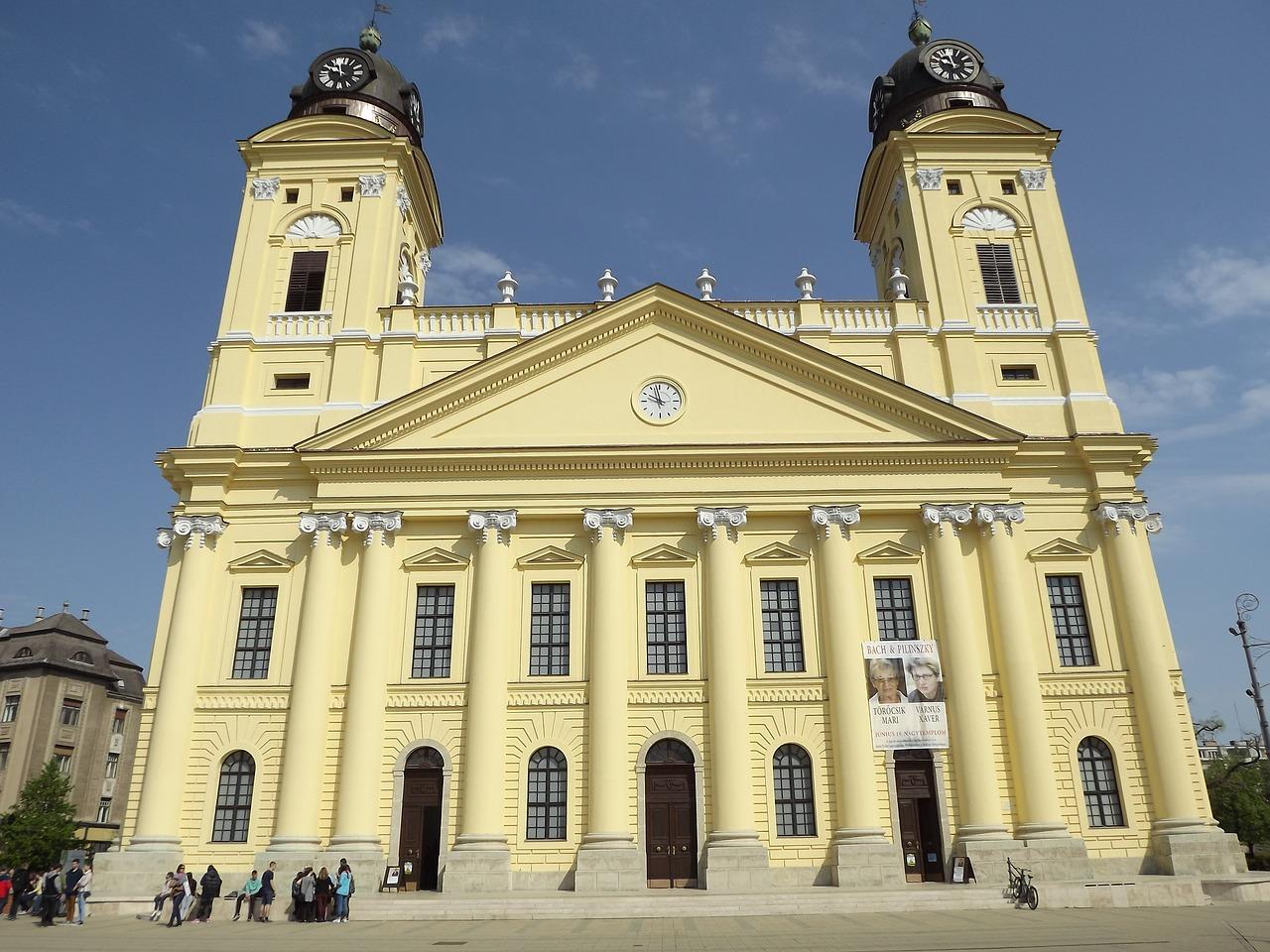
The Great Protestant Church, the largest Calvinist church in Hungary
Debrecen, Hungary's second-largest city, offers a glimpse into the country's Protestant heritage and rural traditions. Known as the "Calvinist Rome," this city played a crucial role in Hungarian history — the Declaration of Independence from the Habsburgs was proclaimed here in 1849, and the city served as Hungary's capital twice during turbulent times.
The massive Great Protestant Church dominates the main square with its twin towers and bright yellow facade — the largest Protestant church in Hungary and a symbol of Hungarian Reformation. Inside, you'll find one of Europe's largest organs. But Debrecen isn't just about religion; it's the gateway to the Hortobágy National Park, where Hungarian cowboys (csikós) still herd grey cattle across the endless puszta (steppe). Visit during the Flower Carnival in August, when millions of blooms create parade floats of breathtaking artistry.
📍 Southern Hungary — 46.2530° N, 20.1414° E
Szeged: The City of Sunshine
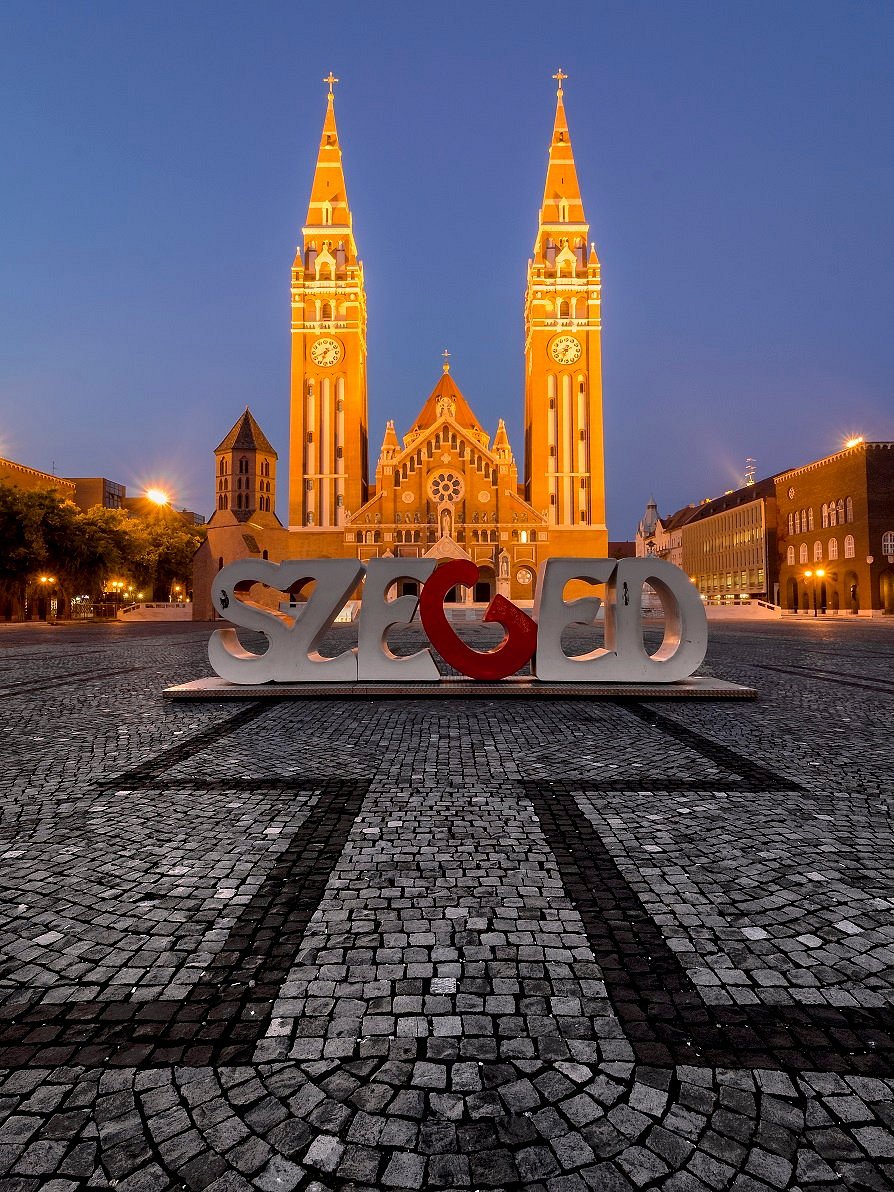
The Votive Church of Szeged dominating Dóm Square
Szeged basks in more annual sunshine than any other Hungarian city, earning it the nickname "City of Sunshine." After the Great Flood of 1879 destroyed most of the city, Szeged was rebuilt in grand Art Nouveau (Secessionist) style, creating one of Central Europe's most beautiful urban centers. The Votive Church — Hungary's fourth-largest church — dominates Dóm Square with its twin towers and pink-checkered roof tiles.
The city is famous for its paprika, the spice that gives Hungarian cuisine its signature red color and smoky flavor. Visit the Paprika Museum to understand why Szeged's version is considered the world's finest. Don't miss the Open-Air Festival held in the cathedral square each summer, where opera and theater performances take place under the stars. And like any proper Hungarian city, Szeged offers excellent thermal baths, including the Anna Baths housed in an elegant neo-baroque building.
📍 Southwest Hungary — 46.0727° N, 18.2323° E
Pécs: The City of Mediterranean Vibes
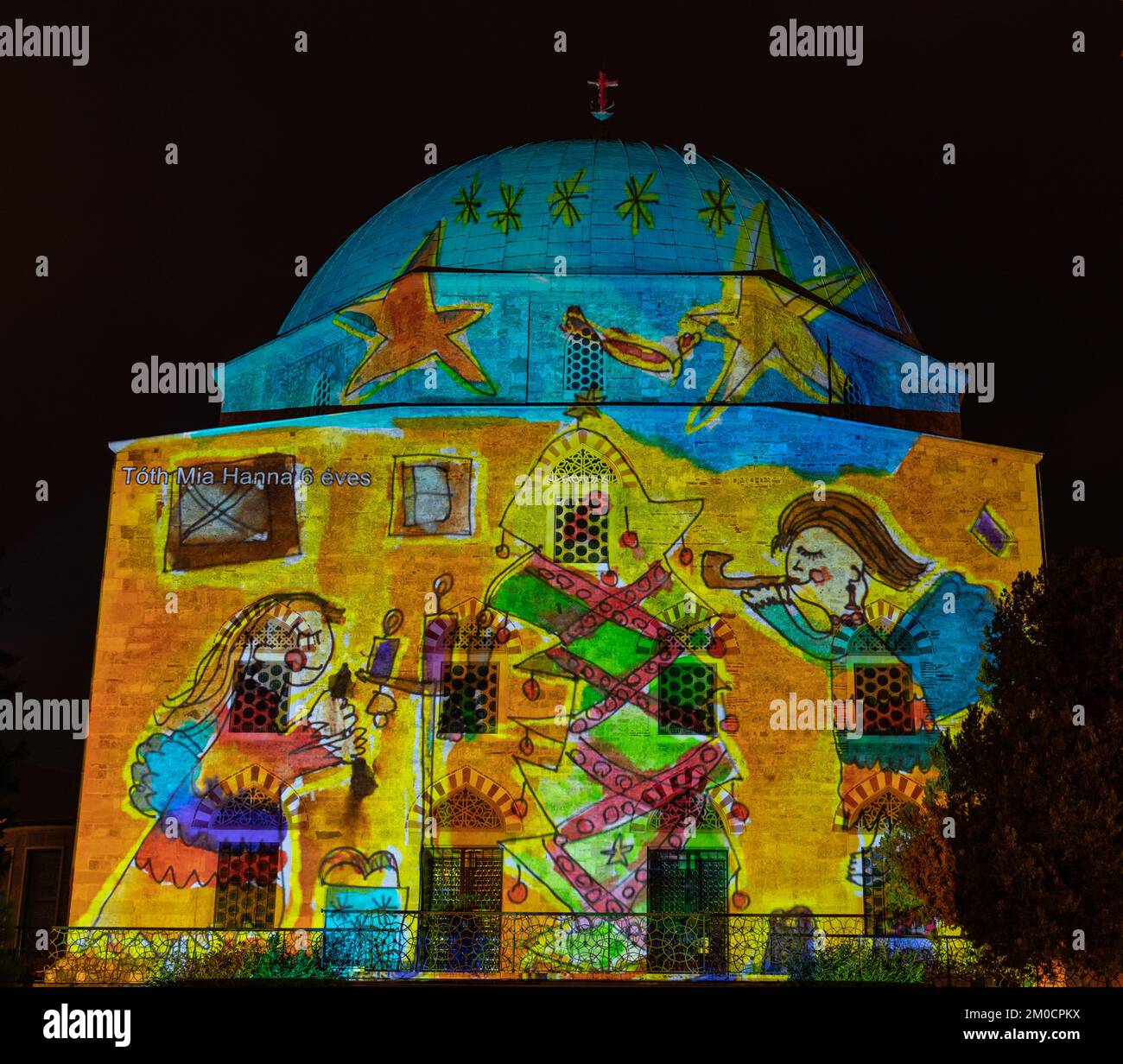
Széchenyi Square with the historic Gázi Kászim pasha Mosque (now a church)
Pécs feels different from other Hungarian cities — there's a Mediterranean atmosphere here, influenced by 150 years of Ottoman rule and proximity to Croatia. The city's crown jewel is the Mosque Church, originally built by the Turks in the 16th century and later converted into a Catholic church, creating a unique blend of Islamic and Christian architecture.
The Early Christian Necropolis, a UNESCO World Heritage site, features 4th-century tombs with remarkably preserved frescoes from the Roman period. Pécs was also European Capital of Culture in 2010, and that creative energy still pulses through its streets. The Zsolnay Cultural Quarter celebrates the city's famous porcelain factory, whose iridescent tiles adorn buildings across Hungary. With its cafe culture, mild climate, and vibrant university scene, Pécs feels like Budapest's cooler, calmer cousin.
Why Hungary Captivates
Hungary is the Europe you dream of but think no longer exists — grand cafes where waiters wear bow ties, thermal baths where time slows down, and cities where a concert ticket costs less than a coffee in London. From the thermal waters of Hévíz (Europe's largest thermal lake) to the wine cellars of Eger (home of the famous Bull's Blood), from the folk traditions of the Great Plain to the buzzing nightlife of Budapest, Hungary offers authenticity in an increasingly homogenized world.
The food is hearty, the wines are surprising (try the Tokaji Aszú, the "wine of kings"), and the welcome is genuine. Whether you're soaking in a 500-year-old Turkish bath, exploring a Baroque palace, or simply watching the sunset paint the Danube gold, Hungary reminds you why you fell in love with travel in the first place.
🌶️ Egészségedre! (To your health!) 🇭🇺